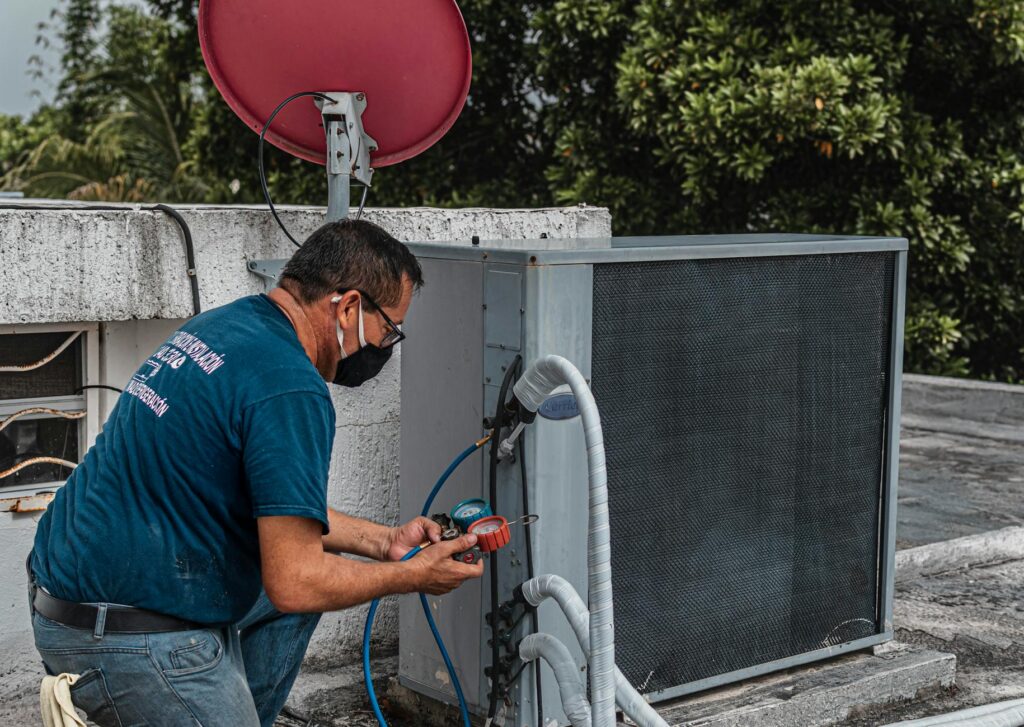
A furnace that won’t turn on can leave your home uncomfortably cold, but the solution is often simpler than you think. Most common startup issues stem from thermostat problems, a tripped circuit breaker, or a clogged air filter. Before calling a professional, walk through these troubleshooting steps to identify and potentially fix the problem yourself. (Related: 7 Essential HVAC System Staging Types in 2026: Complete Comparison Guide) (Related: Window AC vs Central Air: Complete Cost Comparison for Summer 2026) (Related: Packaged AC Units vs Split Systems: 7 Sizing and Cost Differences in 2026)
Check Your Thermostat Settings and Power
Your thermostat is the command center for your furnace, so start here when your system refuses to start. First, verify that your thermostat is actually powered on—check for a display screen or indicator light. If it’s a battery-powered model, replace the batteries with fresh ones. Low battery power is one of the most overlooked causes of furnace failure.
Next, confirm that your thermostat is set to “Heat” mode, not “Cool” or “Off.” This sounds obvious, but it’s surprisingly common, especially during seasonal transitions. Set the temperature several degrees higher than the current room temperature to force the system to activate. Wait about 30 seconds to see if you hear the furnace igniting in your basement or utility closet.
If your thermostat has a display, look for error codes or warning messages. Modern thermostats often show diagnostic information that can point you toward the problem. Check your thermostat manual for what these codes mean, or take a photo and reference it when speaking with a technician if self-help doesn’t work.
Reset the Furnace Breaker and Inspect the Pilot Light
Electrical issues are the second most common cause of furnace startup failures. Locate your home’s electrical panel and find the breaker labeled “Furnace” or “HVAC.” Check if the switch is in the “On” position. If it’s been tripped to the middle or “Off” position, switch it back to “On.” If the breaker trips immediately again, this indicates an electrical problem that requires professional attention.
For gas furnaces, the pilot light is crucial for ignition. Access your furnace’s inspection window and look for a small blue flame. If the pilot light is out, you may smell natural gas. Do not attempt to relight it if you detect a strong gas odor—evacuate your home and call your gas company’s emergency line immediately.
If there’s a slight gas smell but no pilot light, turn off the furnace for 5 minutes to allow any gas to dissipate. Then, locate the pilot light reset button (usually red or black) and press it while holding a long lighter or match near the pilot opening. Hold the reset button for 30 seconds after the pilot ignites. If the pilot won’t stay lit, the thermocouple may be faulty and will need professional replacement.
Clean or Replace Your Air Filter
A clogged air filter restricts airflow and can trigger safety shutdowns that prevent your furnace from starting. Locate your furnace’s filter compartment—typically found near the return air duct or inside an air handler unit. Remove the current filter and hold it up to a light source. If you can’t see light through the filter, it’s definitely clogged.
Note the filter size (usually printed on the frame, like 16x25x1 or 20x25x4) and purchase a replacement with the same dimensions. Insert the new filter with the arrow pointing toward the furnace. Many homeowners make the mistake of installing filters backward, which prevents proper airflow and can cause startup issues.
Establish a filter replacement routine to prevent this problem in the future. Standard 1-inch filters typically need replacement every 1-3 months, depending on household dust levels, pets, and allergies. Thicker 4-inch or 5-inch filters last longer—usually 6-12 months—and are worth the investment for better filtration and furnace reliability.
Use Our Furnace Sizing Calculator
Once you’ve got your furnace running again, it’s worth evaluating whether your current system is appropriately sized for your home. An oversized or undersized furnace can lead to cycling issues and inefficient heating. Use our furnace sizing calculator to determine the correct BTU capacity for your space. This calculation accounts for your home’s square footage, insulation quality, climate zone, and other factors to recommend the ideal system size. If your existing furnace is significantly undersized or oversized, upgrading to a properly matched unit could resolve persistent startup issues and improve your heating efficiency.
FAQ: Furnace Troubleshooting
Why does my furnace keep shutting off after a few minutes?
Short cycling—where your furnace starts and then shuts down prematurely—usually indicates a clogged filter, dirty flame sensor, or thermostat problem. First, replace your air filter. If the issue persists, the flame sensor (which detects whether the burner is properly lit) likely needs cleaning or replacement. This component gets dirty over time and can cause the furnace to shut down as a safety measure. Professional cleaning or replacement is typically required.
My furnace turns on but produces no heat. What’s wrong?
If your furnace runs but your home stays cold, you may have a gas supply issue, a broken heat exchanger, or a blower fan failure. First, confirm your gas valve is open (the handle should point along the pipe direction, not perpendicular). If you smell gas, don’t investigate further—call your gas company. If gas isn’t the issue, the heat exchanger or blower motor likely need professional inspection and repair, as these aren’t DIY-friendly components.
Should I call a professional or keep troubleshooting?
Call a professional if: you detect a gas smell; the breaker trips repeatedly; you see visible corrosion or damage to the furnace; the pilot light won’t stay lit after one reset attempt; or you’ve completed these basic steps and the furnace still won’t start. Professional technicians have specialized equipment to diagnose and safely repair complex issues like heat exchanger cracks or faulty ignition modules. Attempting repairs beyond these basic checks could damage your system or create safety hazards.