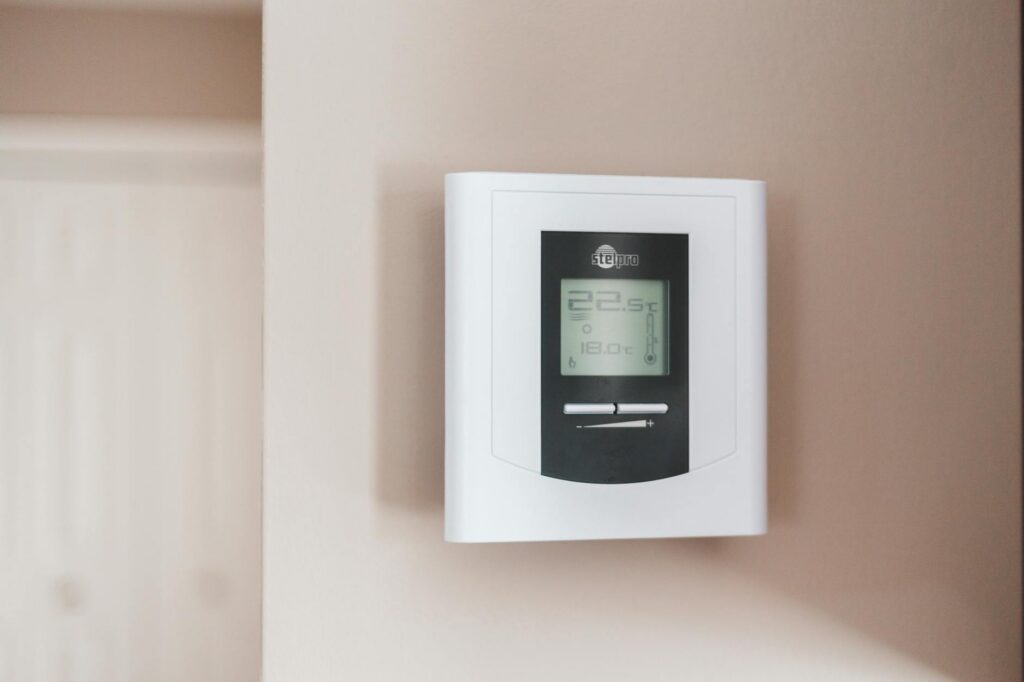
Smart thermostats typically save more energy and money than programmable models, reducing heating and cooling costs by 10-23% annually through machine learning and remote control capabilities. While programmable thermostats offer basic scheduling, smart thermostats adapt to your lifestyle, provide detailed usage reports, and integrate with home automation systems for superior savings potential.
Understanding Programmable Thermostats
Programmable thermostats have been around since the 1980s and operate on a straightforward principle: you manually set a schedule for temperature adjustments throughout the day and week. These devices typically allow 4-6 preset temperature schedules, meaning you might program them to lower the temperature at 10 PM and raise it again at 6 AM.
The primary advantage of programmable thermostats is their simplicity and affordability. They cost between $40-$150 and require minimal setup. You program your schedule once, and the thermostat executes it automatically without requiring input from you.
However, programmable thermostats have significant limitations. They don’t learn your actual habits—they rely on the schedule you create. If your routine changes (working from home one day, having unexpected guests, or weather changes), your preset schedule doesn’t adapt. Studies show most homeowners never change their programmable thermostat settings after installation, meaning they miss out on potential savings.
Energy savings with programmable thermostats typically range from 1-3% annually if properly programmed and maintained. The inconsistency comes from user behavior: if you manually override the schedule frequently or fail to adjust it seasonally, savings diminish significantly.
Smart Thermostat Technology and Savings
Smart thermostats represent the next generation of climate control technology. These internet-connected devices use machine learning algorithms to understand your patterns, preferences, and lifestyle. Popular brands integrate with smartphones, allowing remote temperature adjustments from anywhere.
Smart thermostats achieve superior energy savings through several mechanisms:
- Machine Learning: They learn your schedule within 1-2 weeks and automatically adjust temperatures based on patterns. If you typically leave at 8 AM and return at 6 PM, the thermostat learns this and adjusts accordingly.
- Weather Awareness: Many smart thermostats factor in outdoor temperature, humidity, and weather forecasts to optimize heating and cooling cycles.
- Geofencing: Your smartphone’s location triggers automatic adjustments. Leave home, and the thermostat lowers temperature; approach your house, and it pre-conditions your space.
- Remote Access: Adjust temperature from your phone, addressing the common problem of people leaving thermostats at uncomfortable settings.
- Detailed Reports: Smart thermostats provide energy consumption data, helping you understand usage patterns and identify savings opportunities.
Energy savings with smart thermostats range from 10-23% annually, according to multiple studies. The ENERGY STAR program reports that smart thermostats can reduce heating and cooling energy by an average of 10%, with some users achieving even greater reductions.
Smart thermostats cost between $150-$400 initially, but the higher price includes WiFi connectivity, advanced sensors, learning algorithms, and integration capabilities. Many homeowners recoup this investment within 2-3 years through energy savings alone.
Cost Comparison: Short-term vs Long-term
Deciding between these thermostat types depends on your timeline and situation.
Initial Investment: Programmable thermostats win here at $40-$150 versus $150-$400 for smart thermostats. If budget is your only concern, programmable is cheaper upfront.
Annual Operating Costs: Assume an average home spends $1,200 annually on heating and cooling. With a programmable thermostat saving 1-3%, you save $12-$36 yearly. A smart thermostat saving 10-23% saves $120-$276 annually.
Payback Period: A smart thermostat at $250 with annual savings of $150 pays for itself in approximately 1.7 years. After that, you’re enjoying pure savings. A programmable thermostat at $100 with $24 annual savings takes over 4 years to pay back—and provides minimal savings afterward.
10-Year Perspective: Over ten years, a programmable thermostat costs $100 plus $240 in savings forgone (assuming consistent 1.3% savings). A smart thermostat costs $250 plus delivers approximately $1,500 in energy savings, netting you significantly ahead.
Additionally, smart thermostats often qualify for utility rebates and tax credits. Many utilities offer $50-$200 rebates for smart thermostat installation, and some states provide tax incentives, effectively reducing your net cost.
How to Calculate Your Potential Savings
Understanding your specific energy savings potential requires knowing your current heating and cooling costs and usage patterns. Use the HVAC Cost Calculator to estimate your system’s efficiency and potential savings with upgraded controls. This tool helps you determine your baseline energy consumption and project realistic savings based on your climate zone and home characteristics.
Frequently Asked Questions
Do I need professional installation for a smart thermostat?
Most smart thermostats can be installed by homeowners with basic electrical knowledge, though professional installation ($100-$200) is available if needed. The installation process typically takes 30 minutes to 1 hour. However, if your HVAC system has unusual wiring or you’re uncomfortable with electrical work, professional installation is recommended and often includes warranty benefits.
Are smart thermostats compatible with all HVAC systems?
Smart thermostats work with most standard HVAC systems including forced-air furnaces, heat pumps, air conditioners, and radiant heating. However, some older systems or unusual setups may have compatibility issues. Check your thermostat’s compatibility before purchase, or consult an HVAC technician. Most modern homes have compatible systems.
Can I use a smart thermostat if I rent my home?
Yes, smart thermostats are renter-friendly since they don’t require permanent modifications and can be removed when you move. You’ll need landlord approval for installation, but most landlords appreciate tenants who reduce energy consumption. Programmable thermostats are also renter-compatible if the landlord prefers simpler technology. Many rental properties benefit from the flexibility and portability of smart thermostats.