Air Handler vs Air Conditioner: Key Differences Explained
An air handler is the indoor unit that circulates conditioned air throughout your home, while an air conditioner is the outdoor unit that cools the refrigerant and removes heat from your air. Understanding the difference between these two components is essential for maintaining your HVAC system effectively and knowing which part might need repair or replacement.
What Is an Air Handler?
An air handler is an indoor HVAC component that serves as the distribution hub of your heating and cooling system. It contains a blower fan, filter rack, and evaporator coil (in cooling systems). The primary function of an air handler is to pull air from your home through the return ductwork, filter it, and then push it through the supply ducts after it has been conditioned.
The air handler works in conjunction with either an air conditioner (for cooling) or a furnace (for heating). Inside the air handler, the refrigerant from your outdoor unit flows through the evaporator coil, and as warm air from your home passes over this cold coil, the heat is absorbed, and the cooled air is then distributed back into your living spaces.
Air handlers are typically located in attics, basements, crawlspaces, or utility closets. Modern air handlers come in various sizes to accommodate different home cooling and heating needs. They’re also available in both horizontal and vertical orientations depending on your installation space.
What Is an Air Conditioner?
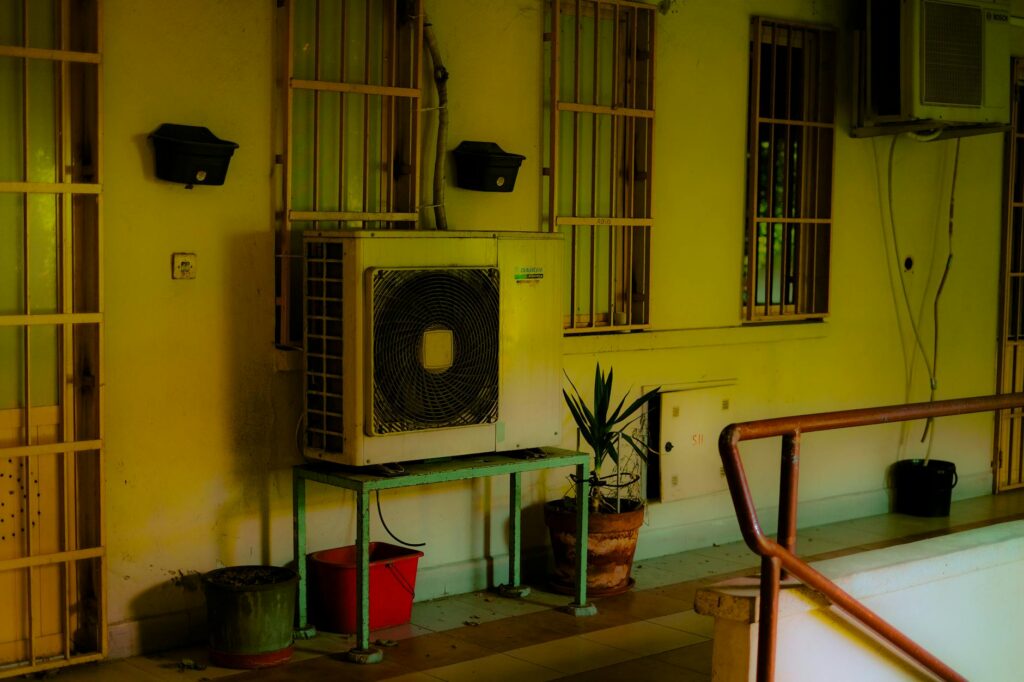
An air conditioner is the outdoor unit of your cooling system that performs the hard work of removing heat from your home. This unit houses the condenser coil, compressor, and fan. The compressor pressurizes refrigerant, which then flows to the condenser coil where the heat absorbed from your home is released into the outdoor air.
The air conditioner is where the refrigerant cycle takes place. Hot, high-pressure refrigerant enters the condenser coil, and as the outdoor fan blows air across this coil, the refrigerant cools down and becomes a liquid. This cooled refrigerant then travels to your indoor air handler’s evaporator coil to repeat the cycle.
Air conditioners must be installed outdoors on a level surface with adequate clearance around the unit for proper airflow. The outdoor temperature affects how efficiently your air conditioner operates—it works harder on extremely hot days and more efficiently during mild weather. Regular maintenance of your outdoor unit, such as cleaning the condenser coils and keeping vegetation clear, is crucial for system performance.
Key Operational Differences
The main operational difference between an air handler and an air conditioner lies in their roles within the system. The air handler is passive in the cooling process—it simply moves air and provides a location for heat exchange. The air conditioner, meanwhile, is active, using electrical power to compress refrigerant and actively reject heat outdoors.
Another important difference is that you can have an air handler without an air conditioner if your system uses a furnace for heating. However, you cannot have an air conditioner without an air handler (or another indoor unit). The two components must work together as a matched pair to create a complete cooling system.
Temperature regulation also differs between the two. Your air conditioner’s thermostat controls when the outdoor unit operates based on your home’s temperature setpoint. The air handler’s blower fan can run independently of the air conditioner, which is why you might notice the fan running when the cooling system isn’t actively cooling—this helps with air circulation and filtration.
How to Use the HVAC Calculator
If you’re trying to determine what size air handler and air conditioner unit you need, our HVAC sizing calculator can help you find the right capacity for your home. Simply input your home’s square footage, climate zone, insulation level, and other variables to receive personalized recommendations for equipment sizing.
Proper sizing is critical—an undersized system won’t cool your home adequately, while an oversized system wastes energy and cycles on and off inefficiently. Using our calculator ensures you get matched equipment that operates at peak efficiency.
Frequently Asked Questions
Can an air handler work without an air conditioner?
Yes, an air handler can function without an air conditioner if your home uses a furnace for heating. The air handler would circulate warm air from the furnace during winter months. However, for summer cooling, you need both the air handler and air conditioner working together as a matched system.
How often should I maintain my air handler and air conditioner?
Both components benefit from professional maintenance at least once per year, ideally before the cooling season begins (spring). This includes cleaning or replacing filters in the air handler every 1-3 months, cleaning the condenser coils on your outdoor unit, checking refrigerant levels, and inspecting electrical connections. Regular maintenance extends equipment life and maintains efficiency.
What’s the average lifespan of an air handler versus an air conditioner?
Both components typically last 12-15 years with proper maintenance, though many systems continue operating beyond this timeframe. However, air conditioners tend to degrade slightly faster than air handlers because they operate in harsh outdoor conditions. When one component fails, it’s often worth replacing both units simultaneously to ensure optimal compatibility and efficiency.
- Honeywell Home Smart Thermostat — Complements understanding of air handlers and AC systems by allowing users to control and monitor their HVAC equipment efficiently
- HVAC System Maintenance Kit & Tools — Directly relevant for homeowners learning about air handlers and air conditioners who need basic tools for system upkeep and filter changes
- Window Air Conditioner Unit — Practical alternative solution for readers understanding AC systems who may need supplemental cooling or want to compare different cooling technologies
SPONSORED
Estimating Software Built for HVAC Contractors
ArcSite lets you draw site plans, create estimates, and close jobs faster — all from your phone or tablet. Used by 100,000+ field service professionals.
Try ArcSite Free →Affiliate partner — we may earn a commission at no cost to you.
SPONSORED
Need HVAC Cleaning or Home Services?
Cleanster connects homeowners with vetted cleaning and home service professionals. Book online in minutes.
Book a Service →Affiliate partner — we may earn a commission at no cost to you.