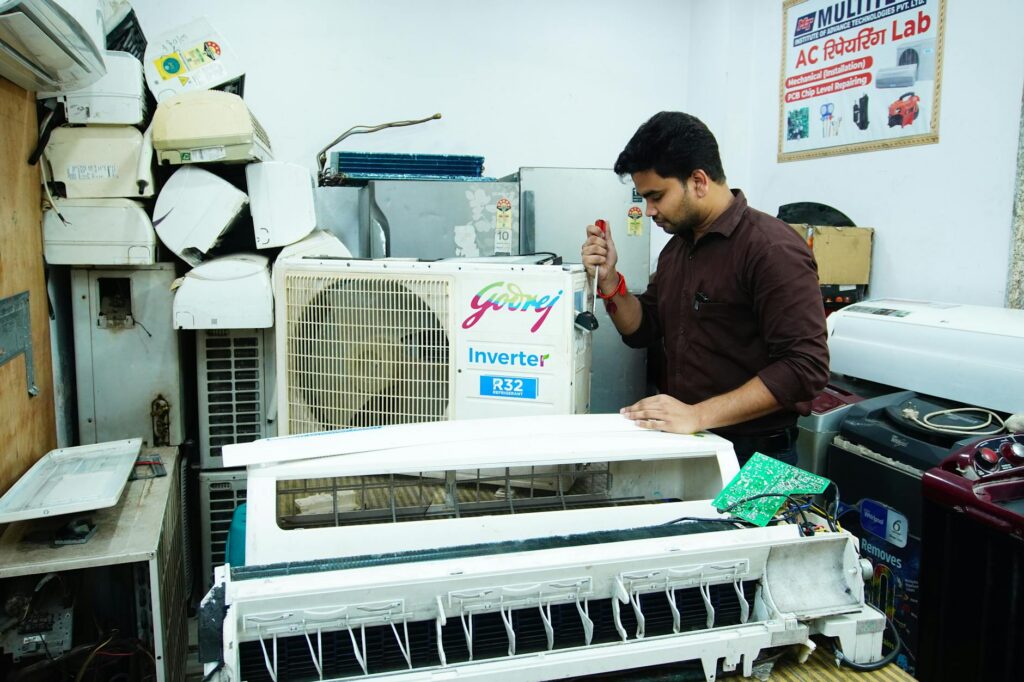
When your air conditioning system stops cooling your home effectively, the culprit is often something you can diagnose and fix yourself. Common issues include dirty filters, low refrigerant levels, thermostat problems, or blocked condenser units. This guide walks you through troubleshooting steps to restore comfort quickly.
Check Your Air Filter and Airflow Restrictions
A clogged air filter is the #1 reason AC systems underperform. According to the U.S. Department of Energy, a dirty filter restricts airflow by up to 50%, forcing your system to work harder while delivering less cool air to your home.
What to do:
- Locate your return air ductwork (usually in a wall or ceiling)
- Remove the current filter and note its size (commonly 16x25x1, 20x25x1, or 16x20x1)
- Hold it up to light—if you can’t see through it clearly, it’s time for a replacement
- Install a new MERV 8-11 rated filter (standard residential grade)
- Replace filters every 30 days during cooling season, or every 90 days if you have pets or allergies
Also check for blocked vents and registers throughout your home. Furniture, curtains, or closed doors can prevent cool air from circulating. Ensure at least 6 inches of clearance around supply vents and keep return vents unobstructed.
Inspect Refrigerant Levels and System Leaks
Low refrigerant is the second leading cause of inadequate cooling. Your AC system should maintain a sealed loop—if refrigerant is low, you have a leak somewhere in the line, compressor, or condenser coil.
Warning signs of low refrigerant:
- Weak airflow from vents despite a clean filter
- Ice buildup on refrigerant lines (copper tubing outside or near the indoor unit)
- Hissing or bubbling sounds from the outdoor condenser
- System cycles on and off frequently without reaching set temperature
Refrigerant types vary by system age. Older units typically use R-22 (Freon), while modern systems use R-410A. Never attempt to add refrigerant yourself—EPA regulations require certified technicians to handle refrigerants. A professional will identify the leak source, repair it, and recharge your system to manufacturer specifications. Expect this service to cost $200–$600 depending on leak severity.
Verify Your Thermostat Settings and Calibration
Before calling for service, confirm your thermostat isn’t the issue. A miscalibrated sensor or incorrect settings waste time and money.
Thermostat troubleshooting checklist:
- Mode setting: Ensure it’s set to “Cool,” not “Heat,” “Auto,” or “Off”
- Temperature target: Set it 5–10°F below current room temperature to trigger active cooling
- Fan setting: Switch between “Auto” (runs only when cooling) and “On” (runs continuously)
- Battery check: If wireless, replace batteries if display is dim or unresponsive
- Location test: Move away from direct sunlight, heat sources, or drafty areas that fool the sensor
- Calibration: If your thermostat reads room temperature 2°F off from a handheld thermometer, recalibrate using the device menu (consult your manual)
Older mechanical thermostats may need professional recalibration. Smart thermostats with remote sensors offer better accuracy but require proper Wi-Fi connectivity and app settings.
How to Use Our HVAC Calculator to Right-Size Your System
An undersized AC unit won’t cool your entire house effectively, no matter how well it operates. Use our HVAC size calculator to determine if your current system matches your home’s cooling load. Input your square footage, insulation level, window count, and climate zone. The tool calculates the required BTU capacity—critical information for homeowners considering replacement or upgrading an underperforming unit. Most homes need 20–25 BTU per square foot of conditioned space.
FAQ: AC Cooling Problems Answered
Q: Why is my AC running but not blowing cold air?
A: This typically indicates low refrigerant, a frozen evaporator coil (from low airflow), or a compressor malfunction. First, check and replace your air filter. If the filter is clean but the system still doesn’t cool, inspect outdoor refrigerant lines for ice or leaks. If you see frost buildup, turn off the system immediately to prevent compressor damage, and call a technician. These issues require professional diagnosis and repair.
Q: How long does it take AC to cool a house?
A: A properly sized and functioning system should cool your home 1–2°F per hour on a 95°F day. If your AC takes longer than 3–4 hours to reach setpoint, the system may be undersized, the filter may be clogged, or refrigerant may be low. Factors like home insulation, window shading, and outdoor humidity also affect cooling speed.
Q: Can I fix low AC refrigerant myself?
A: No. The Environmental Protection Agency (EPA) requires EPA Section 608 certification to handle refrigerants legally. Unauthorized refrigerant handling results in fines up to $37,500. Technicians must identify and repair leaks before recharging. DIY refrigerant kits available online violate regulations and void warranties. Always hire licensed HVAC professionals for refrigerant work.
When to Call an HVAC Professional
Contact a licensed technician if:
- You’ve replaced the filter and cleared obstructions, but cooling hasn’t improved
- You notice ice on refrigerant lines or hear unusual noises (hissing, grinding, squealing)
- Your thermostat displays error codes
- The system cycles on and off every few minutes without stabilizing
- You suspect a refrigerant leak (oil spots on outdoor condenser, hissing sounds)
Regular preventive maintenance—annual spring inspections by a certified technician—catches problems early and extends system life by 5–10 years. Most service calls cost $100–$200 for diagnosis and minor repairs; major component replacement or refrigerant service runs $300–$1,200.
By addressing filter clogs, verifying thermostat settings, and checking for refrigerant issues, you’ll resolve most AC cooling problems. When DIY steps don’t work, professional service ensures your system operates safely and efficiently all season.
- HVAC Air Filter 16x25x1 (Multi-pack) — Dirty filters are a primary cause of AC cooling failure mentioned in the post. A multi-pack allows homeowners to replace filters regularly as part of maintenance.
- Digital Programmable Thermostat — Thermostat problems are listed as a common AC issue. A quality programmable thermostat helps diagnose and prevent temperature-related cooling failures.
- AC Refrigerant Leak Detector Kit — Low refrigerant levels are cited as a major culprit. A leak detector helps homeowners identify and troubleshoot refrigerant issues before calling a professional.
Related: Why Is My AC Not Cooling? 7 Fixes That Work
Related: AC Not Cooling? 7 Common Causes and Fixes
SPONSORED
Estimating Software Built for HVAC Contractors
ArcSite lets you draw site plans, create estimates, and close jobs faster — all from your phone or tablet. Used by 100,000+ field service professionals.
Try ArcSite Free →Affiliate partner — we may earn a commission at no cost to you.
SPONSORED
Need HVAC Cleaning or Home Services?
Cleanster connects homeowners with vetted cleaning and home service professionals. Book online in minutes.
Book a Service →Affiliate partner — we may earn a commission at no cost to you.