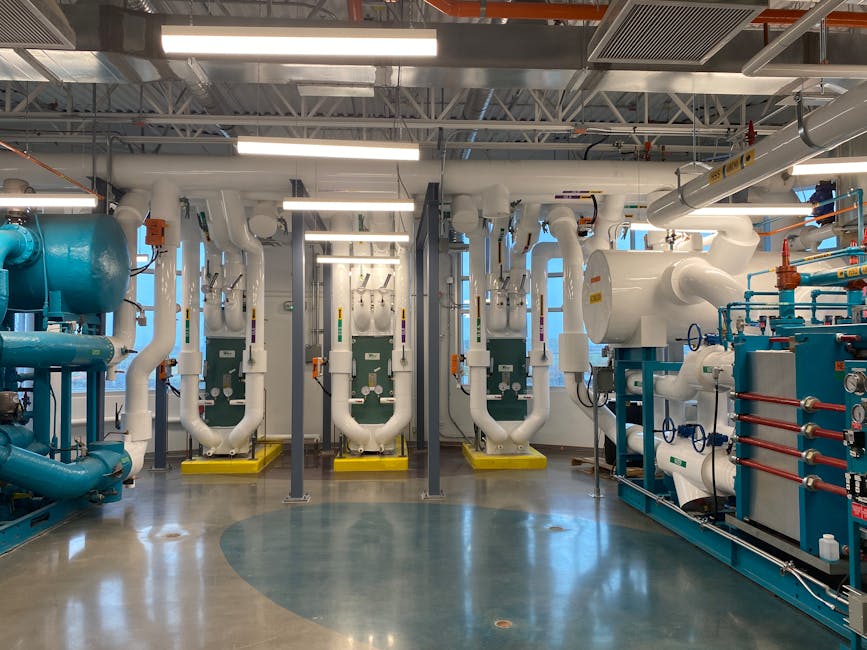
Variable Refrigerant Flow (VRF) systems require precise sizing based on total building cooling/heating load, zone count, and simultaneous operation diversity. Proper sizing ensures optimal efficiency, comfort, and prevents oversizing or undersizing issues affecting performance and operating costs. (Related: Heat Pump Sizing Calculator: How to Right-Size a Heat Pump for Maximum Energy Savings and Lower Bills) (Related: Tons of Cooling Calculator: Size Your AC System Right) (Related: Window AC Sizing Guide: 5 Essential Steps for 2026) (Related: How Climate Resilience Programs Impact HVAC Sizing and Cooling Demand in Urban Areas) (Related: How to Read Your AC Unit Nameplate: The Complete 2026 Guide) (Related: How to Size a Furnace for Your Home: Complete 2026 Guide)
What Are Variable Refrigerant Flow Systems
Variable Refrigerant Flow systems represent a sophisticated evolution in multi-zone HVAC technology. Unlike traditional forced-air systems, VRF uses refrigerant as the direct heating and cooling medium, circulating it through a network of indoor units connected to one or more outdoor condensing units.
Each indoor unit operates independently, modulating refrigerant flow to match the precise thermal demand of its zone. This flexibility makes VRF systems especially valuable in buildings with varying occupancy patterns, mixed-use spaces, or complex architectural layouts.
What is the difference between VRF and traditional HVAC systems?
Traditional HVAC systems deliver conditioned air through ductwork at a fixed capacity, cycling on and off to maintain temperature. VRF systems eliminate ductwork losses and deliver refrigerant directly to zone-level air handlers. Key differences include:
- Capacity modulation: VRF inverter compressors adjust output from roughly 10% to 100% capacity, while conventional systems typically run at fixed speeds
- Simultaneous heating and cooling: Heat recovery VRF configurations allow some zones to heat while others cool, transferring energy internally rather than rejecting it
- Zoning granularity: A single VRF outdoor unit can support anywhere from 2 to 64 indoor units depending on the manufacturer and model series
- Installation footprint: Refrigerant piping requires significantly less space than duct systems, benefiting retrofits and high-rise applications
According to the U.S. Department of Energy’s heating and cooling resources, variable-speed systems can reduce energy consumption by 30% or more compared to single-stage equipment in comparable applications.
VRF Sizing Fundamentals and Load Calculation
Accurate variable refrigerant flow capacity calculation begins with a full Manual J-equivalent load analysis for each zone. Skipping this step and relying on square footage rules of thumb produces systems that short-cycle, struggle during peak loads, or waste energy during partial-load operation.
How do you size a VRF system for different zones?
Sizing a VRF system across multiple zones follows a structured process that accounts for individual zone loads and their combined interaction with the outdoor unit:
- Calculate individual zone peak loads: Determine the maximum heating and cooling demand for each room or zone using envelope heat transfer, infiltration, internal gains from occupants and equipment, and solar exposure.
- Apply a diversity factor: Not every zone reaches peak load simultaneously. Most commercial VRF applications use a diversity factor between 0.7 and 0.85, meaning the outdoor unit only needs to handle 70–85% of the sum of all indoor unit capacities.
- Size indoor units to zone loads: Select each indoor unit at or slightly above the calculated zone peak load. Oversizing indoor units causes temperature swings and humidity control problems.
- Size the outdoor unit to connected capacity: Most manufacturers allow total connected indoor unit capacity to exceed outdoor unit rated capacity by 115–130%, accounting for the diversity factor.
- Verify piping equivalent length: Refrigerant piping length and elevation change derate system capacity. Always consult manufacturer-specific correction factors for runs exceeding 100 equivalent feet.
For mixed-use spaces, the multi-zone HVAC sizing guide approach requires separate load calculations for each distinct occupancy type rather than averaging across the building. A server room and an open office have dramatically different internal load profiles and cannot be treated uniformly.
Use our BTU load calculator to generate accurate zone-by-zone thermal demand figures before selecting any VRF equipment.
Advanced Zoning Strategies for VRF Systems
VRF zone design best practices go beyond load math. Strategic zoning decisions affect occupant comfort, energy performance, and long-term maintenance costs.
Group zones by exposure and occupancy schedule. Zones with similar solar orientation and usage hours behave more predictably when served by the same refrigerant branch circuit. Pairing a south-facing conference room with a north-facing storage area on the same branch creates scheduling conflicts and reduces efficiency.
Separate zones with radically different setpoints. Server rooms, commercial kitchens, and walk-in coolers should always be isolated on dedicated indoor units or separate refrigerant systems. Their continuous high-load operation conflicts with the diversity assumptions built into standard VRF sizing.
Consider heat recovery configurations for buildings with simultaneous heating and cooling needs. Heat recovery VRF (also called HR-VRF) adds a branch controller that allows refrigerant to flow in opposite directions simultaneously. This topology is more expensive but recovers substantial energy in buildings where perimeter zones need heating while interior zones require cooling — a common condition in shoulder seasons.
Plan refrigerant piping routes early. Equivalent pipe length calculations must account for every fitting, bend, and vertical rise. Exceeding manufacturer limits on total equivalent length or height difference between outdoor and indoor units can permanently reduce system capacity and trigger safety lockouts.
Selecting Indoor and Outdoor Unit Configurations
Indoor unit style selection is a critical component of effective VRF system sizing and zoning. Each style has a different throw pattern, static pressure rating, and installation requirement:
- Wall-mounted cassettes: Best for smaller zones with open floor plans; limited by low external static pressure
- Four-way ceiling cassettes: Ideal for open commercial spaces; provide even air distribution across 360 degrees
- Ducted concealed units: Suited for zones requiring filtered, conditioned air through short duct runs; allows integration with ventilation
- Floor consoles: Appropriate for spaces with limited ceiling height or large glass facades requiring perimeter heating
Outdoor unit selection must account for rated capacity at local design conditions, not just nominal capacity. A unit rated at 10 tons at ARI standard conditions (95°F outdoor, 80°F/67°F indoor) will deliver measurably less capacity at 105°F — a common summer peak in southern climates. Always request manufacturer performance tables at your specific design temperature.
The Department of Energy’s efficiency guidance recommends verifying rated efficiency at real-world operating conditions, not just laboratory standard ratings, to make accurate operating cost comparisons.
VRF System Efficiency and Energy Considerations
VRF systems are rated using Integrated Energy Efficiency Ratio (IEER) for cooling and Coefficient of Performance (COP) for heating. IEER reflects weighted performance across multiple part-load conditions, making it a more realistic efficiency metric than peak-load EER alone.
Properly sized VRF systems spend the majority of operating hours at 40–70% capacity, where inverter compressors operate most efficiently. Oversized systems that frequently modulate down to minimum capacity or cycle off entirely lose much of this efficiency advantage.
Operating cost modeling should account for local utility rate structures. Time-of-use rates that penalize peak demand hours reward VRF systems’ ability to pre-condition spaces during off-peak windows and coast through
- HVAC Load Calculation Software — Directly supports the core topic of VRF system sizing by helping professionals accurately calculate building cooling/heating loads, which is essential for proper VRF dimensioning
- Digital Psychrometric Chart and HVAC Calculator — Essential tool for HVAC professionals performing VRF sizing calculations, zone analysis, and understanding simultaneous operation diversity factors
- HVAC Refrigerant Scale and Charging Kit — Practical equipment needed for proper installation and maintenance of correctly-sized VRF systems to ensure optimal efficiency and performance
See also: Air Handler vs Air Conditioner: The Complete 2026 Difference Guide
See also: Complete Guide to HVAC Staging: 3 System Types in 2026
SPONSORED
Estimating Software Built for HVAC Contractors
ArcSite lets you draw site plans, create estimates, and close jobs faster — all from your phone or tablet. Used by 100,000+ field service professionals.
Try ArcSite Free →Affiliate partner — we may earn a commission at no cost to you.
SPONSORED
Need HVAC Cleaning or Home Services?
Cleanster connects homeowners with vetted cleaning and home service professionals. Book online in minutes.
Book a Service →Affiliate partner — we may earn a commission at no cost to you.