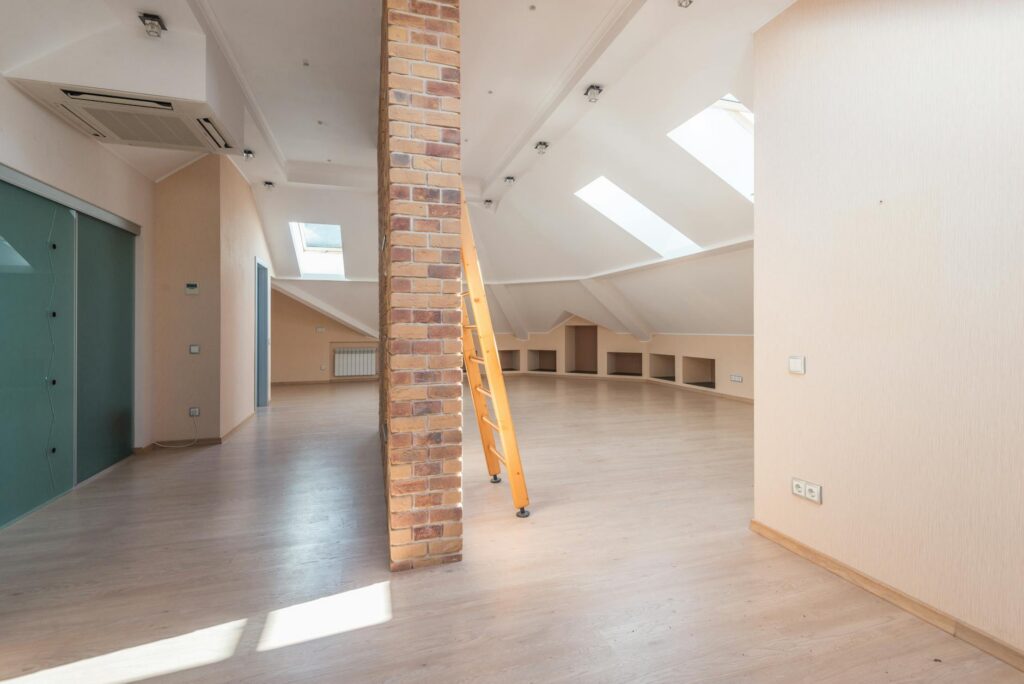
Attic insulation is one of the most overlooked factors affecting your air conditioning efficiency and monthly energy bills. A properly insulated attic can reduce your cooling costs by 10-30% by preventing heat from entering your home during summer months. Poor or missing insulation forces your AC system to work harder, reducing its lifespan and driving up utility expenses.
Understanding Heat Transfer Through Your Attic
Your attic acts as a buffer zone between your home’s interior and the outdoor environment. During summer, the sun heats your roof to temperatures exceeding 150°F, and without adequate insulation, this heat radiates directly into your living spaces below. This process is called radiant heat transfer, and it’s the primary reason attics become extremely hot.
When heat penetrates your attic, your air conditioning system must work overtime to maintain your desired indoor temperature. This increased workload means:
- Higher energy consumption and utility bills
- Shorter AC system lifespan due to extended running cycles
- Uneven cooling throughout your home
- Reduced comfort, especially in upper-level rooms
The insulation’s R-value (thermal resistance rating) is critical. Most HVAC experts recommend R-38 to R-60 for attic insulation in warm climates, depending on your geographic location and current energy codes. The higher the R-value, the better your insulation resists heat transfer.
The Direct Impact on AC Efficiency and Performance
Your air conditioning system’s efficiency rating (SEER or SEER2) is measured under ideal laboratory conditions. However, real-world performance depends heavily on your home’s insulation quality. When attic insulation is inadequate, your AC unit cannot achieve its rated efficiency because it’s constantly fighting against heat infiltration.
Here’s how poor attic insulation affects your system:
Increased Cycle Time: Your compressor runs longer to cool your home, consuming more electricity and generating unnecessary wear on mechanical components. Over time, this reduces the system’s overall lifespan from the typical 12-15 years to as little as 8-10 years.
Temperature Stratification: Without proper attic insulation, upper-floor rooms and rooms closest to the attic become significantly warmer than lower levels. You’ll find yourself lowering the thermostat to compensate, which dramatically increases energy usage.
Thermostat Short-Cycling: In homes with poor insulation, the thermostat may fail to accurately sense temperature because heat is unevenly distributed. This can cause your AC to cycle on and off more frequently, reducing efficiency and comfort.
Moisture and Condensation Issues: Inadequate attic insulation can lead to condensation buildup, which creates an environment where dust and debris accumulate on your AC’s return air vents. This reduces airflow efficiency and can damage your system’s components.
Calculating Your Cooling Load and Insulation Needs
Determining the right amount of attic insulation for your specific situation involves calculating your home’s cooling load—the amount of heat your AC must remove to maintain comfort. This calculation considers several factors:
- Square footage of your home
- Current attic insulation levels
- Climate zone and outdoor design temperatures
- Window type and orientation
- Air sealing and duct leakage
Many homeowners assume they need to max out insulation R-values, but the optimal insulation level depends on balancing cost against energy savings. In some regions, R-38 provides excellent returns on investment, while in others, R-49 or higher is recommended.
A professional energy audit can identify where you’re losing cooling efficiency and prioritize improvements. Typically, attic insulation upgrades rank among the best ROI improvements for AC efficiency, often paying for themselves within 3-5 years through reduced energy bills.
How to Use Our AC Efficiency Calculator
To get a personalized estimate of how attic insulation improvements might affect your cooling costs, use our HVAC cooling load calculator. This tool allows you to input your current insulation R-value and see projected energy consumption before and after upgrades. Simply enter your home’s square footage, insulation level, and climate zone to get an accurate assessment of your current AC efficiency and potential savings.
Frequently Asked Questions
What R-value insulation should I install in my attic?
The recommended R-value depends on your climate zone. For warm climates (zones 1-3), R-38 to R-49 is standard. For hot climates, R-49 to R-60 is recommended. Check your local building codes and consult with an HVAC professional who understands your specific climate conditions. The Department of Energy provides regional guidance based on your zip code.
Can adding attic insulation reduce my AC energy bills?
Yes, absolutely. Studies show that proper attic insulation can reduce cooling costs by 10-30%, depending on your current insulation levels and climate. Homes with minimal or deteriorated attic insulation see the greatest savings. The payback period is typically 3-5 years, making it one of the best investments for HVAC efficiency.
Does attic insulation work if my home already has some insulation?
Most homes have some attic insulation, but it may be insufficient or deteriorated. If your insulation is below the recommended R-value for your climate, adding more insulation will improve efficiency. If your existing insulation is compressed, wet, or heavily settled, it’s no longer effective and should be replaced or supplemented with additional layers.
Proper attic insulation is fundamental to maximizing your air conditioning efficiency. By reducing heat infiltration, you’ll enjoy lower energy bills, improved comfort, and a longer-lasting HVAC system. Whether you’re planning an upgrade or troubleshooting cooling problems, start by evaluating your current attic insulation against your climate zone recommendations.
- Attic Insulation Roll (Fiberglass) — Directly addresses the main topic of the post; homeowners reading about attic insulation efficiency will likely want to purchase insulation materials
- Attic Insulation Blower Machine — Practical tool for DIY installation of attic insulation, relevant to readers looking to implement the efficiency improvements discussed
- Digital Thermometer & Humidity Meter — Allows homeowners to monitor attic temperature and assess how their insulation improvements are affecting cooling efficiency
SPONSORED
Estimating Software Built for HVAC Contractors
ArcSite lets you draw site plans, create estimates, and close jobs faster — all from your phone or tablet. Used by 100,000+ field service professionals.
Try ArcSite Free →Affiliate partner — we may earn a commission at no cost to you.
SPONSORED
Need HVAC Cleaning or Home Services?
Cleanster connects homeowners with vetted cleaning and home service professionals. Book online in minutes.
Book a Service →Affiliate partner — we may earn a commission at no cost to you.