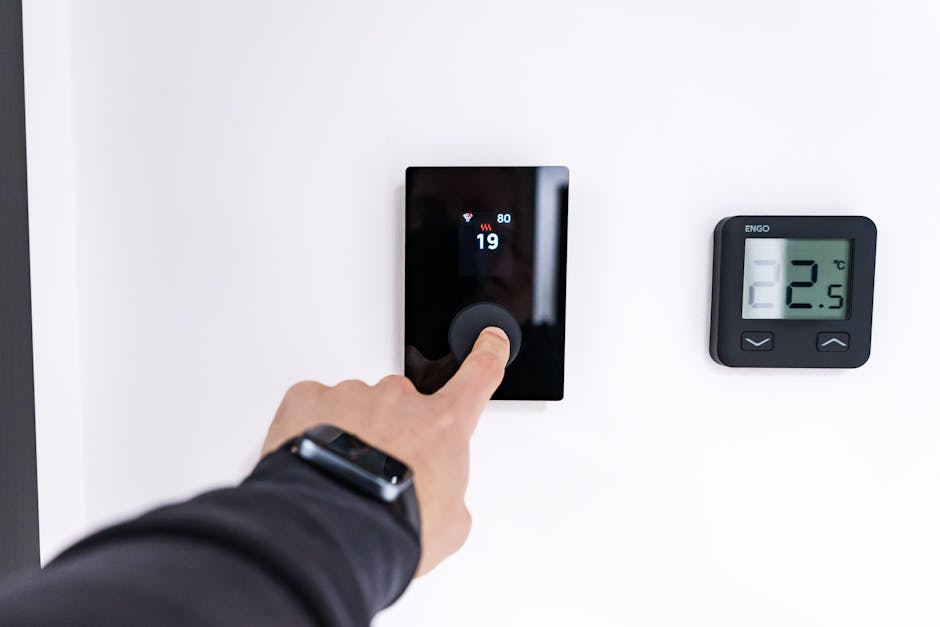
Smart thermostats offer 10-23% energy savings by learning your heating and cooling patterns, adjusting temperatures automatically, and providing remote control via smartphone apps. They’re compatible with most modern HVAC systems but require proper installation to ensure optimal performance and maximum efficiency gains.
What Are Smart Thermostats and How Do They Work?
A smart thermostat is an internet-connected device that manages your home’s heating and cooling systems with greater precision than traditional thermostats. Unlike basic programmable models, smart thermostats use artificial intelligence and machine learning to understand your lifestyle and automatically adjust temperatures when you’re home, away, or sleeping.
These devices connect to your Wi-Fi network and send data to your smartphone, allowing you to adjust your HVAC system from anywhere. They track occupancy patterns, weather conditions, and seasonal changes to optimize comfort while reducing unnecessary heating and cooling cycles.
The core benefit lies in their ability to eliminate waste. A conventional programmable thermostat requires manual scheduling and doesn’t adapt to unexpected changes in your routine. Smart thermostats actively learn your preferences and make real-time adjustments, keeping your home comfortable while minimizing energy consumption.
Energy Savings: How Much Can You Actually Save?
According to the U.S. Department of Energy, smart thermostat energy savings typically range from 10-23% on annual heating and cooling costs. For the average American household, this translates to $130-$300 in yearly savings, depending on your climate, current HVAC system efficiency, and usage patterns.
Several factors influence your potential savings:
- Climate zone: Homes in extreme climates see larger percentage savings because heating and cooling demand is higher
- System age: Pairing a smart thermostat with a newer, efficient HVAC system amplifies savings
- User behavior: Homes with variable schedules benefit most from automated learning features
- Baseline temperature setting: Households that previously ran systems inefficiently see the greatest improvements
Many utility companies offer rebates for smart thermostat installation, reducing upfront costs by $50-$200. Some programs provide additional incentives when you enable energy-saving features or participate in demand-response programs during peak usage periods.
How much money can you save with a smart thermostat?
Your actual savings depend on how aggressively you program temperature setbacks and how well the device learns your patterns. Conservative estimates suggest $100-$150 annually for mild climates, while homeowners in harsh winters or hot summers may save $250-$400 per year. When you multiply this over a 10-year lifespan, the total savings often exceed $1,500, making the initial investment highly cost-effective.
Smart Thermostat HVAC System Compatibility Guide
Before purchasing a smart thermostat, verify compatibility with your specific HVAC equipment. Most modern systems work seamlessly with smart thermostats, but older or unusual setups may present challenges.
Are smart thermostats compatible with all HVAC systems?
Smart thermostats work with the vast majority of residential heating and cooling systems, including forced-air furnaces, air conditioning units, heat pumps, and hybrid systems. However, compatibility depends on your system’s wiring configuration and control logic.
Most smart thermostat manufacturers provide compatibility checkers on their websites. You’ll need to know your current system type and identify the wires connected to your existing thermostat. Common compatible systems include:
- Single-stage and multi-stage furnaces
- Central air conditioning units
- Heat pumps (air-source and ground-source)
- Radiant heating systems with zone controls
- Hybrid heating systems
Do smart thermostats work with heat pumps and furnaces?
Yes, smart thermostats excel with both technologies. Heat pump systems benefit significantly because smart thermostats can manage the transition between heat pump operation and auxiliary heating, optimizing efficiency. For furnaces, smart thermostats reduce short cycling and unnecessary runtime by maintaining tighter temperature bands.
Homes with dual-fuel systems (heat pump plus furnace backup) see exceptional benefits. The thermostat learns when to rely on the efficient heat pump versus activating the furnace, balancing comfort and energy consumption intelligently.
Installation Considerations and Requirements
Smart thermostat installation ranges from DIY-friendly to complex, depending on your HVAC system and existing wiring. Most modern homes have the necessary wiring to support smart thermostats, but compatibility issues occasionally arise with older installations.
Basic installation steps:
- Turn off power to your current thermostat at the breaker
- Remove your existing thermostat and photograph the wire configuration
- Follow the new device’s wiring diagram to connect terminals correctly
- Secure the new thermostat to the wall plate
- Download the manufacturer’s app and complete the setup wizard
Professional installation costs $100-$300 but is recommended if your wiring is unfamiliar or your system uses uncommon controls. Improper installation can prevent the thermostat from accessing all your system’s features, limiting smart thermostat energy savings potential.
Comparing Smart Thermostats to Traditional Systems
A programmable thermostat vs smart thermostat comparison reveals significant operational differences. Programmable models require manual scheduling and follow fixed temperature patterns regardless of actual occupancy. They cannot learn preferences or adapt to weather changes.
Smart thermostats eliminate this limitation. They provide:
- Automatic learning of your comfort preferences
- Occupancy detection via geofencing
- Weather-responsive adjustments
- Remote access and control via mobile apps
- Energy usage reports and optimization suggestions
- Integration with voice assistants
- Automated alerts for HVAC maintenance needs
While smart thermostats cost $200-$500 installed compared to $50-$150 for programmable models, the energy savings and convenience justify the premium for most homeowners.
How to Choose the Right Smart Thermostat for Your HVAC System
Selection depends on your system type, budget, and desired features. Before shopping, use our thermostat compatibility calculator to verify which models work with your setup.
Key decision factors include:
- Compatibility: Confirm your HVAC system wiring matches the thermostat’s requirements
- Interface: Choose between touchscreen, dial, or hybrid controls based on preference
- Smart home integration: Verify compatibility with your existing smart home ecosystem
- Learning capability: Advanced models learn schedules faster than basic smart thermostats
- Energy reporting: Detailed usage analytics help maximize savings
How to Use the Calculator
Not sure if a smart thermostat will work with your HVAC system? Our HVAC system calculator helps you understand your current setup and identify compatible smart thermostat options. Input your system type, age, and wiring configuration to receive personalized recommendations.
Related: smart thermostat energy savings
Related: repair vs replacement costs
Related: humidity control and dehumidifiers
Related: proper HVAC insulation signs
Frequently Asked Questions
What is the typical payback period
Recommended Resources:- Nest Learning Thermostat — Directly matches the post’s focus on smart thermostats for energy savings; Nest is the market leader in learning thermostats that auto-adjust patterns
- Ecobee SmartThermostat with Voice Control — Popular alternative smart thermostat with smartphone app control and HVAC compatibility, fitting the remote control and energy efficiency benefits discussed
- Professional HVAC Installation Service Tools — Post emphasizes ‘proper installation’ is crucial for optimal performance; complementary product for readers needing installation equipment or DIY guidance
- Nest Learning Thermostat — Directly matches the post’s focus on smart thermostats for energy savings; Nest is the market leader in learning thermostats that auto-adjust patterns
- Ecobee SmartThermostat with Voice Control — Popular alternative smart thermostat with smartphone app control and HVAC compatibility, fitting the remote control and energy efficiency benefits discussed
- Professional HVAC Installation Service Tools — Post emphasizes ‘proper installation’ is crucial for optimal performance; complementary product for readers needing installation equipment or DIY guidance
Related: Programmable Thermostat vs Smart Thermostat: Which Saves More?
Related: How to Read Your HVAC Energy Use on Smart Meters
Related: Programmable vs Smart Thermostat: Which Saves More?
Related: How Inverter AC Technology Cuts Energy Consumption in 2026: 5 Proven Ways
Related: Modulating Furnaces: 5 Proven Efficiency Benefits and Sizing Advantages in 2026
SPONSORED
Estimating Software Built for HVAC Contractors
ArcSite lets you draw site plans, create estimates, and close jobs faster — all from your phone or tablet. Used by 100,000+ field service professionals.
Try ArcSite Free →Affiliate partner — we may earn a commission at no cost to you.
SPONSORED
Need HVAC Cleaning or Home Services?
Cleanster connects homeowners with vetted cleaning and home service professionals. Book online in minutes.
Book a Service →Affiliate partner — we may earn a commission at no cost to you.