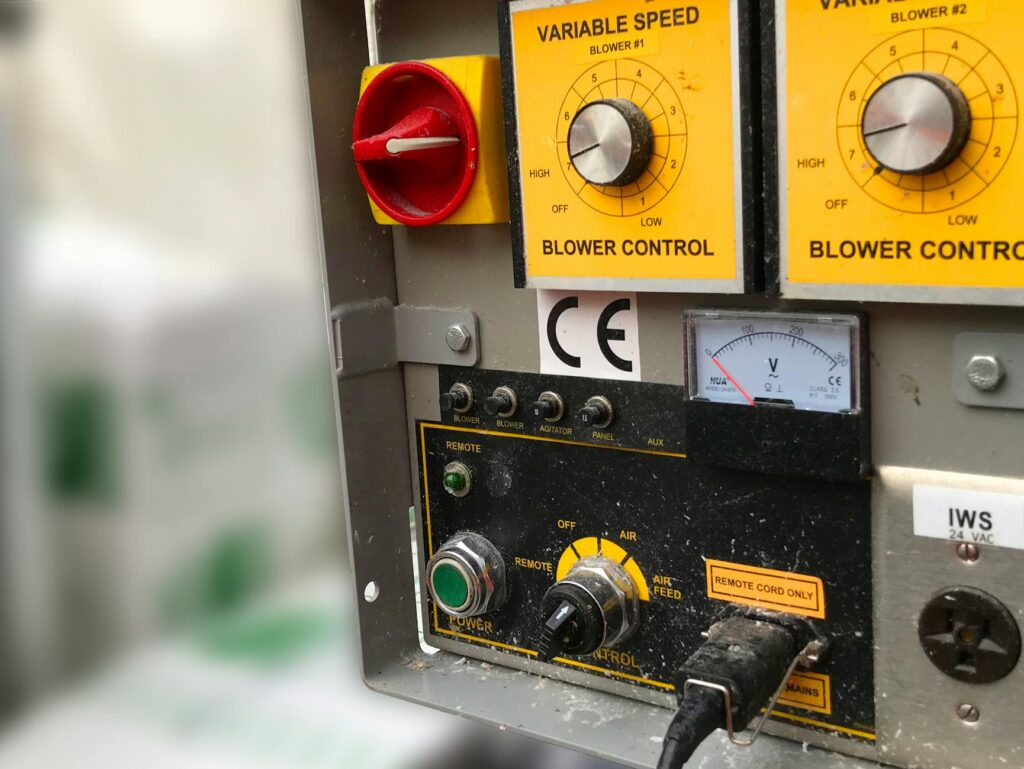
Upgrading your HVAC blower motor can reduce energy consumption by 20-40% while improving comfort and system longevity. A high-efficiency blower motor works smarter, not harder, delivering consistent airflow throughout your home while cutting your annual cooling and heating costs by $200-$400. Let’s break down exactly how blower motor upgrades impact system performance and whether the investment makes sense for your home.
Understanding Blower Motor Efficiency Ratings
Your HVAC system’s blower motor is the workhorse that pushes conditioned air through your ductwork and into every room. Standard PSC (Permanent Split Capacitor) motors have been industry standard for decades, but they’re energy hogs that run at fixed speeds regardless of actual heating or cooling demand.
Modern ECM (Electronically Commutated Motor) upgrades represent a fundamental shift in how blower motors operate. ECM motors adjust their speed based on real-time temperature and airflow needs, meaning they ramp down when demand is light and ramp up only when necessary. According to the U.S. Department of Energy’s 2022 HVAC Efficiency Report, ECM motors consume 75% less electricity than traditional PSC motors during partial-load operation—which is most of the time in moderate climates.
Variable Speed vs. Single Speed
Single-speed blower motors run at full capacity whenever the system cycles on, consuming maximum energy even during mild weather when you need minimal conditioning. Variable-speed ECM motors modulate output, which translates directly to lower utility bills. A homeowner upgrading from PSC to ECM can expect their blower to consume 300-500 watts under normal conditions instead of 800-1200 watts.
Sound and Comfort Benefits
Beyond energy savings, ECM motors operate at lower volumes. Traditional blowers create noticeable noise when they kick into high speed; ECM models run whisper-quiet because they rarely need maximum output. You’ll also notice more consistent temperatures throughout your home since variable-speed motors maintain gentle, continuous airflow rather than aggressive bursts followed by silence.
Real-World Performance Impact on Your HVAC System
The blower motor upgrade isn’t just about spinning the same fan differently—it fundamentally changes how your entire system performs. When your air handler can deliver precise airflow at variable rates, your furnace and air conditioner operate more efficiently.
Extended Equipment Lifespan
Traditional blower motors run hard every time the system cycles, creating wear and tear on bearings, capacitors, and electrical components. ECM motors distribute work more evenly throughout the day, reducing mechanical stress. This means fewer breakdowns and a system that functions reliably for 15-20 years instead of 12-15 years. That’s potentially one fewer replacement in your home’s lifetime.
Better Humidity Control
In cooling mode, blower speed directly affects dehumidification. High-speed blowers rush air through your evaporator coil too quickly, preventing proper moisture removal. ECM motors slow down during moderate cooling demand, allowing more contact time between air and the cold coil. This results in better humidity control—especially valuable in humid climates where comfort depends on both temperature and moisture levels.
Improved Air Quality
Variable-speed operation allows your system to run at lower speeds for extended periods, which means your air filter works more effectively. Slower airflow provides better contact time between incoming air and filter media, capturing more dust, pollen, and allergens. This is particularly beneficial for homes with allergy sufferers or pets.
Cost Analysis: Investment vs. Savings
A blower motor upgrade typically costs $300-$800 depending on your system type and local labor rates. This is substantially cheaper than replacing an entire furnace or air handler ($2,500-$5,000+), yet delivers measurable performance gains.
Payback Period Calculation
If your annual energy savings total $250-$350, your blower motor upgrade pays for itself in 2-3 years. After that payback period, you’re essentially saving that amount every year. Over a 15-year system lifespan, that’s $3,750-$5,250 in pure energy savings—not counting reduced repair costs from less mechanical stress.
Utility Rebates and Incentives
Many utility companies offer rebates for high-efficiency motor upgrades, particularly ECM installations. These rebates typically range from $100-$300 and sometimes cover 25-40% of the upgrade cost. Contact your local utility company to ask about available incentives before scheduling your upgrade.
How to Calculate Your Blower Motor Upgrade Savings
To determine exactly how much you’ll save with a blower motor upgrade, use our HVAC cost and savings calculator. Input your current system specs, local electricity rates, and climate zone to get a personalized estimate of annual energy savings and payback timeline.
Frequently Asked Questions
Can I upgrade my existing blower motor, or do I need to replace my entire system?
In most cases, you can upgrade just the blower motor without replacing your furnace or air handler. A qualified HVAC technician can retrofit an ECM motor into your existing air handler by swapping the motor and installing a compatible control module. This works for systems up to 15-20 years old. Newer systems (less than 5 years old) may already have ECM motors as standard equipment.
Will a blower motor upgrade work with my current thermostat?
Most ECM motor upgrades require a compatible control module that works independently of your existing thermostat. The upgrade includes a module that communicates directly with the ECM motor, adjusting speed based on demand. Your current thermostat continues to function normally; the ECM motor simply operates more intelligently in the background. However, pairing your upgrade with a modern programmable or smart thermostat can unlock even greater savings—up to 15% additional reduction in heating and cooling costs.
How long does a blower motor upgrade take to install?
A straightforward blower motor upgrade typically requires 1-2 hours of labor. The technician disconnects the old motor, removes it from the air handler housing, installs the new ECM motor, wires the control module, and tests the system. Most homeowners can schedule the work as a same-day appointment, with minimal disruption to your home.
- HVAC Blower Motor Replacement Kit — Direct product match for readers looking to upgrade their blower motors with quality replacement options
- Energy Monitor Kill-A-Watt Meter — Helps readers measure actual energy savings from blower motor upgrades before and after installation
- HVAC Maintenance & Service Plan — Complements blower motor upgrades with professional maintenance to maximize system longevity and efficiency gains
See also: Refrigerant Types: R-22 vs R-410A vs R-32 Explained
Related: blower motor upgrades impact on hvac performance
Related: hidden cost of oversized systems
Related: BTU calculator sizing guide
Related: window ac vs central air costs
Related: central AC installation cost summer 2026
Related: best time to replace HVAC
Related: AC not cooling troubleshooting
SPONSORED
Estimating Software Built for HVAC Contractors
ArcSite lets you draw site plans, create estimates, and close jobs faster — all from your phone or tablet. Used by 100,000+ field service professionals.
Try ArcSite Free →Affiliate partner — we may earn a commission at no cost to you.
SPONSORED
Need HVAC Cleaning or Home Services?
Cleanster connects homeowners with vetted cleaning and home service professionals. Book online in minutes.
Book a Service →Affiliate partner — we may earn a commission at no cost to you.