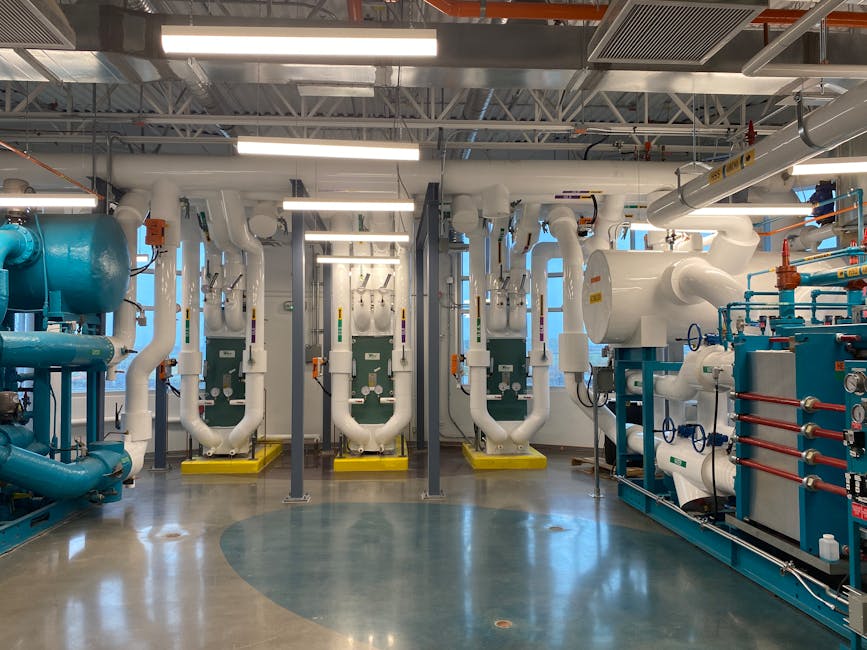
Variable Refrigerant Flow (VRF) systems require sizing based on total building cooling and heating loads, with zoning determined by occupancy patterns, exposure, and thermal zones. Proper sizing accounts for simultaneous heating/cooling diversity and individual zone modulation capacity for optimal efficiency. (Related: How to Size a Heat Pump vs Gas Furnace for Your Home – Comparison Calculator Guide) (Related: How Inverter AC Technology Cuts Energy Consumption in 2026: 5 Proven Ways) (Related: VRF System Sizing and Zoning: The Complete 2026 Guide)
What Are Variable Refrigerant Flow Systems
VRF systems use inverter-driven compressors to modulate refrigerant flow to multiple indoor units simultaneously. Unlike conventional systems that cycle on and off at fixed capacity, VRF units operate continuously at variable speeds — delivering only the refrigerant volume each zone actually needs at any given moment.
This architecture enables a single outdoor unit to serve anywhere from 2 to 50+ indoor zones, with each zone independently controlled. The result is a highly responsive system that adapts to real-time load changes across an entire building without the energy waste associated with oversized, single-stage equipment.
There are two primary configurations:
- Heat Pump VRF: Provides either heating or cooling to all zones simultaneously, switching modes based on dominant demand.
- Heat Recovery VRF: Enables simultaneous heating in some zones and cooling in others, recovering rejected heat energy and redistributing it where needed — a significant efficiency advantage in mixed-use buildings.
According to the U.S. Department of Energy’s heating and cooling guidance, variable-speed systems can reduce energy consumption by 30–40% compared to traditional constant-speed HVAC equipment when properly sized and zoned.
Advanced Sizing Calculations for VRF Units
How do you size a VRF system for a building?
VRF system sizing begins with a room-by-room Manual J load calculation — the ACCA-approved methodology for determining heating and cooling loads in residential and light commercial applications. For larger commercial projects, ASHRAE Handbook load procedures apply. These calculations factor in:
- Envelope U-values (walls, windows, roof, floors)
- Solar heat gain coefficients (SHGC) per orientation
- Internal loads from occupants, lighting, and equipment
- Infiltration and ventilation rates
- Local design temperatures (ASHRAE 99.6% heating / 1% cooling)
Once individual zone loads are established, the outdoor unit capacity is not simply the sum of all indoor unit capacities. Variable refrigerant flow capacity calculation must account for diversity factors — because not all zones peak simultaneously. In a typical commercial building, peak coincident demand is often 70–85% of connected indoor unit total capacity.
Manufacturers publish connection ratio guidelines (typically 50–130% of outdoor unit nominal capacity) that define how much total indoor capacity can be connected. Staying within this ratio while reflecting actual simultaneous load demand is the core engineering challenge in multi-zone refrigerant flow systems.
Use our HVAC load calculator to generate zone-by-zone BTU requirements before selecting outdoor unit capacity.
Zone Design and Distribution Strategies
What is the difference between VRF zoning and traditional HVAC zoning?
Traditional HVAC zoning uses a single central air handler with zone dampers controlling airflow distribution. Each zone gets conditioned air from the same coil — limiting individual temperature precision and wasting energy when only one zone is active.
VRF zone design HVAC works differently. Each indoor unit has its own refrigerant coil and receives exactly the refrigerant mass flow needed to meet its specific load at that moment. Zones operate fully independently — a conference room at 100% capacity doesn’t impact a server room running at 30% capacity on the same outdoor unit.
Effective zone design strategies include:
- Thermal zoning by exposure: Group spaces with similar solar exposure and envelope characteristics. South-facing zones will peak together; don’t mix them with north-facing zones if possible.
- Occupancy-based zoning: Separate spaces with different schedules — office areas, conference rooms, and server closets all have distinct load profiles.
- Piping branch design: Refrigerant branch controllers (BC boxes in heat recovery systems) must be sized to handle maximum concurrent flow without starving any zone. Keep refrigerant pipe runs within manufacturer-specified length and elevation limits.
- Indoor unit selection: Match unit type (cassette, ducted, wall-mount) to architectural constraints and airflow distribution needs rather than defaulting to one type.
Pipe length limits typically cap at 165–230 feet equivalent from outdoor unit to farthest indoor unit, with elevation differences limited to 50 feet between indoor units. Exceeding these limits triggers capacity derating that must be incorporated into final sizing.
Load Analysis for Multi-Zone Applications
Multi-zone refrigerant flow systems demand a more nuanced load analysis than single-zone equipment. The key metric is peak coincident load — the maximum simultaneous demand across all zones at any single point in time, rather than the sum of individual zone peaks.
A proper load analysis workflow for VRF sizing:
- Calculate individual zone peak loads (Manual J or ASHRAE methods)
- Determine zone peak timing (morning east exposure vs. afternoon west exposure)
- Apply diversity factors based on occupancy schedules
- Calculate total coincident peak demand
- Size outdoor unit at 95–105% of coincident peak demand
- Verify connection ratio compliance with selected outdoor unit
- Apply pipe length derating if applicable
Heating mode sizing follows the same logic but uses heating design temperatures. In heat recovery configurations, the simultaneous heating and cooling loads are evaluated together — the system recovers rejected heat from cooling zones and redirects it to heating zones, reducing net energy input significantly.
Run your building’s square footage and construction details through our commercial HVAC sizing calculator to establish baseline loads before applying VRF diversity factors.
Efficiency Optimization and Energy Savings
Properly executed VRF system sizing and zoning unlocks substantial efficiency gains. The inverter compressor modulates between roughly 10% and 100% capacity, eliminating the start-stop cycling losses that reduce efficiency in conventional equipment.
Key optimization strategies:
- Don’t oversize the outdoor unit: Oversized VRF systems spend too much time at minimum modulation, reducing efficiency and increasing wear. Size to coincident peak, not connected capacity sum.
- Enable heat recovery mode: In buildings with simultaneous heating and cooling demand (interior zones vs. perimeter zones), heat recovery VRF can achieve system COPs exceeding 6.0.
- Integrate building automation: VRF systems with BACnet or Modbus connectivity allow demand-based control, setback scheduling, and real-time performance monitoring.
- Verify refrigerant charge at commissioning: Improper charge is the single most common cause of VRF underperformance. Follow manufacturer charge verification protocols precisely.
The Department of Energy notes that high-efficiency variable-speed HVAC systems qualify for federal tax credits under the Inflation Reduction Act
- HVAC Load Calculation Software — Post focuses on sizing VRF systems based on cooling/heating loads; load calculation tools are essential for proper system dimensioning
- Digital Psychrometric Chart & HVAC Calculator — Directly supports the technical calculations needed for VRF zoning and sizing decisions discussed throughout the guide
- HVAC System Design Reference Manual — Comprehensive reference material for HVAC professionals implementing VRF systems and understanding zoning/sizing principles
Related: 7 Essential HVAC System Staging Types in 2026: Complete Comparison Guide
SPONSORED
Estimating Software Built for HVAC Contractors
ArcSite lets you draw site plans, create estimates, and close jobs faster — all from your phone or tablet. Used by 100,000+ field service professionals.
Try ArcSite Free →Affiliate partner — we may earn a commission at no cost to you.
SPONSORED
Need HVAC Cleaning or Home Services?
Cleanster connects homeowners with vetted cleaning and home service professionals. Book online in minutes.
Book a Service →Affiliate partner — we may earn a commission at no cost to you.