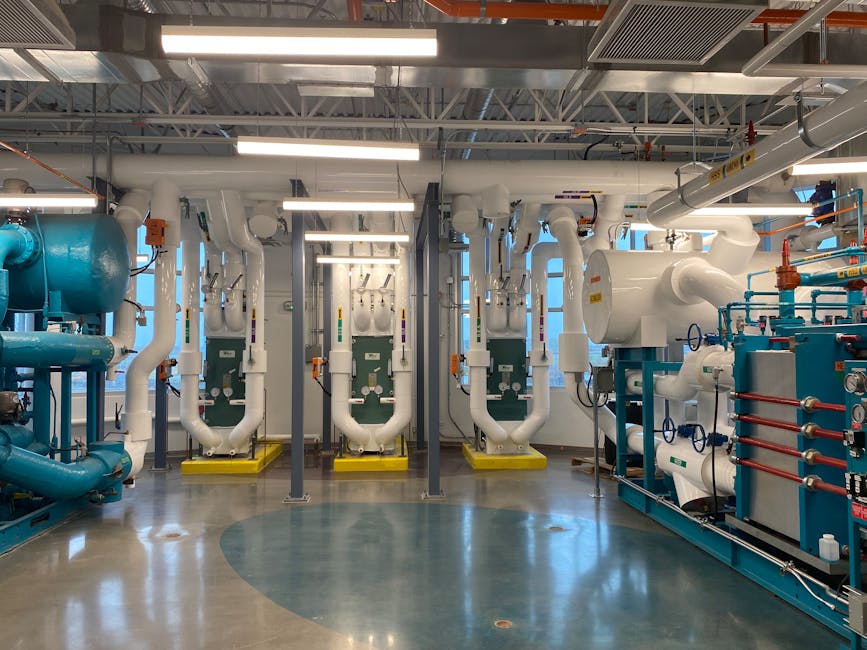
Variable Refrigerant Flow (VRF) systems deliver precise temperature control through multiple indoor units connected to outdoor condensing units. Proper sizing requires calculating total cooling and heating loads, while zoning involves strategically placing indoor units to match occupancy patterns and thermal zones in buildings. (Related: The Complete Guide to Two-Stage Cooling: Is It Worth It in 2026?) (Related: HVAC Repair vs Replacement Cost: The Complete 2026 Guide) (Related: The Complete Guide to HVAC Load Calculation in 2026) (Related: Heat Pump Sizing Calculator: How to Right-Size a Heat Pump for Maximum Energy Savings and Lower Bills) (Related: Tons of Cooling Calculator: Size Your AC System Right) (Related: Air Handler vs Air Conditioner: The Complete 2026 Difference Guide)
What Are Variable Refrigerant Flow Systems?
Variable refrigerant flow HVAC design represents one of the most sophisticated approaches to building climate control available today. Unlike traditional systems that operate at fixed capacity, VRF technology modulates refrigerant flow to each indoor unit independently, responding in real time to changing loads across different spaces.
A typical VRF setup includes one or more outdoor condensing units, multiple indoor air handlers (called indoor units or IUs), and a network of refrigerant piping connecting them. The outdoor unit acts as the system brain, adjusting compressor speed and refrigerant distribution based on demand signals from each zone.
According to the U.S. Department of Energy’s heating and cooling resources, variable-speed HVAC equipment can reduce energy consumption significantly compared to single-stage systems — a primary reason why VRF adoption has accelerated in both commercial and residential applications.
There are three main VRF configurations:
- Cooling-only systems — All indoor units operate in cooling mode simultaneously
- Heat pump systems — All indoor units switch between heating and cooling, but not simultaneously
- Heat recovery systems — Individual zones can heat or cool simultaneously, recovering energy between zones
Understanding VRF Zoning and Indoor Unit Placement
Effective VRF zone configuration begins with a thorough understanding of how occupants use the building. Multi-zone cooling heating systems only perform efficiently when indoor units are matched to actual thermal zones — not arbitrarily placed based on aesthetics or convenience.
What is the difference between VRF zoning and traditional HVAC zoning?
Traditional HVAC zoning uses dampers inside ductwork to redirect airflow from a central air handler. VRF zoning, by contrast, uses individual refrigerant-fed indoor units in each zone, allowing each space to maintain a completely independent temperature setpoint without sharing airflow. This means a conference room can be cooling while an adjacent server room runs at a different temperature — simultaneously and efficiently. VRF zoning is also easier to expand and far more granular than damper-based systems.
Key placement considerations for indoor units include:
- Exposure orientation — South-facing rooms gain more solar heat and may need dedicated units
- Occupancy density — High-occupancy zones like open offices produce significant internal heat loads
- Equipment loads — Server rooms, kitchens, and labs require separate zone treatment
- Piping length limits — Most manufacturers cap total piping runs at 150–300 equivalent feet depending on system size
For help estimating how many zones your building may require, use our HVAC Zone Calculator to map thermal zones by square footage and exposure.
Sizing VRF Systems: Load Calculations and Capacity
How do you size a VRF system for a commercial building?
VRF capacity calculation for commercial buildings follows the ACCA Manual N methodology, which accounts for climate zone, building envelope performance, internal heat gains, ventilation requirements, and occupancy schedules. Each indoor unit is sized individually based on its zone’s peak load, and the outdoor unit is then sized to handle the simultaneous peak demand — which is typically lower than the sum of all individual zone peaks due to load diversity.
Here is the general sizing process:
- Perform a room-by-room load calculation using local design temperatures
- Identify peak simultaneous demand across all zones (diversity factor typically ranges from 0.7 to 0.9)
- Select indoor units sized within 10–15% of each zone’s calculated peak load
- Size the outdoor unit to meet the simultaneous peak, not the sum of all indoor units
- Verify that the combination ratio (total indoor capacity ÷ outdoor capacity) falls within the manufacturer’s acceptable range — usually 50% to 130%
Oversizing is one of the most costly errors in variable refrigerant flow HVAC design. An outdoor unit that is too large will short-cycle, reducing efficiency and increasing wear. Use our Commercial HVAC Load Calculator to generate zone-by-zone estimates before specifying equipment.
Advanced Zoning Strategies for Multi-Zone Buildings
Advanced HVAC zoning strategies for VRF go beyond basic room separation. In larger buildings, smart zone grouping reduces piping complexity and improves part-load efficiency.
Consider these strategies:
- Perimeter vs. interior zoning — Perimeter zones face weather-driven load swings while interior zones are dominated by constant internal gains. Treating these separately improves control precision.
- Heat recovery branch selection — In heat recovery VRF systems, group zones that are likely to need simultaneous heating and cooling on the same branch controller to maximize energy recovery potential.
- Demand control integration — Linking VRF controls to occupancy sensors and building automation systems (BAS) allows the system to reduce capacity in unoccupied zones automatically.
- Dedicated outdoor air systems (DOAS) — VRF handles sensible and latent loads well, but pairing it with a DOAS unit for ventilation improves indoor air quality and allows downsizing of the VRF system itself.
VRF System Design Best Practices
Successful VRF installations depend on disciplined design decisions made before equipment is ever ordered. Based on load calculation methodology and manufacturer engineering guidelines, the following practices consistently produce the best outcomes:
- Always perform Manual N or equivalent load calculations — never use rule-of-thumb BTU-per-square-foot estimates for VRF design
- Account for refrigerant piping elevation changes, which affect system capacity and must be verified against manufacturer limits
- Design for future zone additions by selecting outdoor units with headroom in the combination ratio
- Coordinate with the electrical engineer early — VRF outdoor units often require dedicated 3-phase circuits and significant panel capacity
- Confirm refrigerant type compliance with current and upcoming regulations; as noted by Energy.gov’s heating and cooling guidance, low-GWP refrigerant transitions are accelerating industry-wide
Common VRF Sizing and Zoning Mistakes to Avoid
- Ignoring diversity factors — Assuming all zones peak simultaneously leads to an oversized outdoor unit
- Mismatched indoor unit types — Mixing cassette, wall-mount, and ducted units on a single branch without accounting for static pressure differences creates airflow imbalances
- Exceeding piping length limits — Long refrigerant runs reduce delivered capacity; always apply manufacturer derating tables
- Skipping ventilation planning — VRF recRecommended Resources:
- Kill-A-Watt Electricity Usage Monitor — Helps HVAC professionals and building owners measure energy consumption of VRF systems to verify proper sizing and zoning efficiency after installation.
- Digital Clamp Meter/Multimeter — Essential tool for technicians to measure electrical loads and verify VRF system performance during sizing calculations and commissioning.
- Infrared Thermometer Gun — Used to verify temperature distribution across multiple zones and validate that VRF zoning placement is delivering proper thermal control throughout the building.
Related: Scroll vs Rotary Compressors: 5 Key Sizing Impacts in 2026
Related: Complete Ductless Mini Split Systems Sizing Guide and Installation Costs 2026
See also: How to Size a Heat Pump vs Gas Furnace for Your Home – Comparison Calculator Guide
See also: How Inverter AC Technology Cuts Energy Consumption in 2026: 5 Proven Ways
See also: Air Handler vs Air Conditioner: The Complete 2026 Guide
See also: HVAC System Cost Guide by Home Size: What Homeowners Should Budget for 1,500-3,000 sq ft Homes
See also: Manual J Calculation: The Complete Guide for Homeowners
See also: VRF System Sizing and Zoning: The Complete 2026 Guide
Related: Complete Guide to VRF System Sizing and Zoning in 2026
Related: Complete Guide to VRF System Sizing and Zoning in 2026
Related: Complete Guide to VRF System Sizing and Zoning in 2026
SPONSORED
Estimating Software Built for HVAC Contractors
ArcSite lets you draw site plans, create estimates, and close jobs faster — all from your phone or tablet. Used by 100,000+ field service professionals.
Try ArcSite Free →Affiliate partner — we may earn a commission at no cost to you.
SPONSORED
Need HVAC Cleaning or Home Services?
Cleanster connects homeowners with vetted cleaning and home service professionals. Book online in minutes.
Book a Service →Affiliate partner — we may earn a commission at no cost to you.